
Perfect Size. Great Amenities.
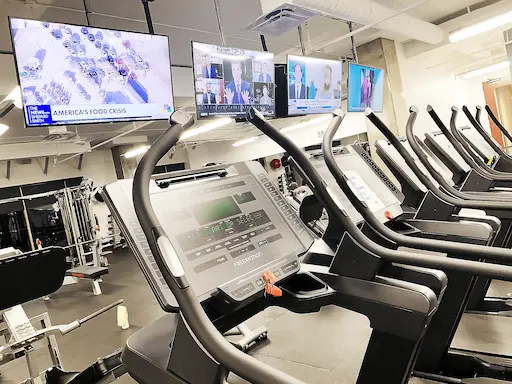
Membership is capped on purpose. Zero waits at peak hours. Prime Fitness, Hammer Strength, and Freemotion equipment rarely found anywhere else in West Plano.
The Science
Willow Bend's brain training program is grounded in over 60 years of peer-reviewed research and more than 700 published scientific studies. Neurofeedback is not a wellness trend; it is a clinical tool with a robust evidence base spanning attention, anxiety, cognitive performance, and trauma recovery. Understanding the mechanism helps members engage with the program more effectively and set accurate expectations for outcomes.
The brain is not a fixed structure. Neuroplasticity refers to its capacity to reorganize neural pathways in response to repeated experience, a capacity that persists throughout life, not just in childhood. Neurofeedback leverages this property deliberately by providing the brain with real-time information about its own electrical activity and rewarding it for producing healthier patterns.
With consistent training across 30 to 40 sessions, these rewarded patterns become the brain's default states. The changes are measurable via EEG and correlate with functional improvements in attention, stress response, sleep, and cognitive performance.
At its core, neurofeedback uses operant conditioning, the same learning process that underlies all skill development. Sensors measure brainwave activity 4 to 6 times per second. When the brain produces a target frequency pattern, the user receives a reward signal: an audio tone, a brightening screen, or a visual cue. When the pattern drifts, the reward disappears.
Over many repetitions, the brain associates the target state with positive feedback and learns to produce it more reliably. This process operates below conscious awareness, making it accessible to users with no prior mindfulness or meditation experience.
The brain produces electrical oscillations across a continuous frequency spectrum, each range associated with distinct cognitive and physiological states. Delta waves (0.5 to 3 Hz) govern deep restorative sleep and tissue repair. Theta waves (3 to 8 Hz) correspond to relaxed, creative, and memory-consolidation states. Alpha waves (8 to 12 Hz) represent calm, ready alertness and are the most common target for performance and stress protocols. Beta waves (12 Hz and above) drive active problem-solving and focus, but excess high-beta activity correlates strongly with chronic anxiety and cognitive fatigue.
Protocols at Willow Bend are built around an individual's EEG map, targeting the specific frequency imbalances identified in that person's baseline measurement.
The American Academy of Pediatrics has recognized neurofeedback as an evidence-based therapy for attention and executive function, on par with medication. Peer-reviewed studies demonstrate that 9 weeks of consistent training produces significant, sustained improvements in attention. For anxiety, data shows 61 to 69 percent of participants transition to healthy stress ranges over three months of alpha training.
Research on cognitive performance shows neurofeedback can alter suboptimal brainwave states associated with memory difficulties and reduced executive function. NASA has also used EEG-based training protocols for attention and performance optimization in high-demand roles.
Quantitative EEG (qEEG) provides the diagnostic foundation for the entire program. Raw brainwave recordings are analyzed and compared against normative databases to identify where an individual's activity patterns deviate from optimal ranges. The resulting brain map shows precisely which regions and frequencies are over-active, under-active, or dysregulated.
This specificity is what separates clinical neurofeedback from generic mental wellness apps. The protocol is not one-size-fits-all; it is built from the individual's own neural data and adjusted as that data changes over the course of training.
The Difference
Membership is capped on purpose. Zero waits at peak hours. Prime Fitness, Hammer Strength, and Freemotion equipment rarely found anywhere else in West Plano.
Community, relationships, and a country-club standard of care. You'll know your coaches, and they'll know you.
No assumptions. We assess, design, and execute around your body, your goals, and your pace.
Start with a complimentary 20-minute brain wave assessment at Willow Bend and understand what your EEG data reveals about your cognitive performance baseline.